

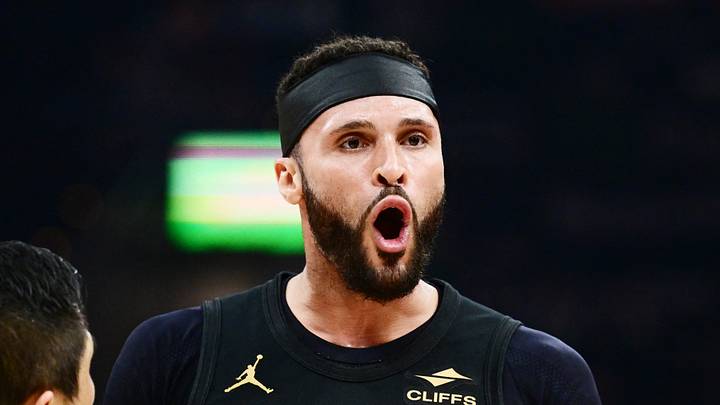
The San Antonio Spurs spent the 2025-26 season on a polar-opposite path to the lowly Indiana Pacers. While the Spurs had taken a dreadful season the year prior and flipped the script completely to become the West's second seed at 62 wins, the Pacers had fallen apart following their Finals run, ending the year with less than a third of the Spurs' win total.
Seeing just those two numbers, the trendlines of one team improving and one nosediving (context is important, but still), it seems obvious that the Pacers could do a lot worse than emulating the Spurs. They may not have a 7'4 alien to depend on, but there's more to success than one player.
However, despite making the Finals with a core of second- and third-year players and the youngest starting lineup in the league, the Spurs made a massive mistake that the Pacers are unfortunately duplicating.
They are burning valuable roster spots on players who cannot play a role. The Spurs rostered Kelly Olynyk, Bismack Biyombo, and Mason Plumlee. When Victor Wembenyama needed rest, San Antonio had to depend on Luke Kornet, a deeply flawed player, because none of those three were remotely usable in any setting.
Now, looking at the Pacers roster, it seems pretty likely that Indiana has at least two of those players in their active roster. It truly seems more likely that one of the three two-way options will be more helpful than Larry Nance Jr.
It may seem unimportant, as the rotation will only be eight or nine players, not the full 15-man roster, but open roster spots are one of the most underrated assets in the modern NBA. Lighting them on fire is a tactical disasterclass.
Why do roster spots matter?
NBA teams are forced to have 14 players on the roster at any given time, with a maximum of 15, alongside their three two-way spots. Exhibit 10/10-day contracts are a separate case entirely, which are paid out at a pro-rated game-by-game level, and are excluded from those roster limits.
Roster spots can be used in any number of ways within the current CBA, but they are primarily broken down into two categories: signings and trades.
Shockingly, every way of acquiring talent requires those spots. Remember how Braden Smith spent the offseason technically unsigned before Ethan Thompson signed in Serbia? That was because the Pacers did not want to burn one of their full roster spots on the second-round pick when they could stash him on a two-way.
That saga seemingly hinted that the Pacers are aware of their value, but some of their moves have pointed in the opposite direction.
Now, with one spot left and just over two million in space under the first apron, Indiana's best shout to make a move is to take back two players for one, to split a mid-sized contract into two smaller ones, hoepfully finding two players they can play.
That approach makes sense, but only if it does bring back real players. Indiana has a problem with their depth, but no more space to make signings to amend that. To spurn flexibility, you need to be confident in what you have.
Indiana clearly is, but their season is still on uncertain ground just months before tip-off. Any mistake is magnified and this clearly is one.
The size of that error will become clear only when it's too late.
 Add us as a preferred source on Google